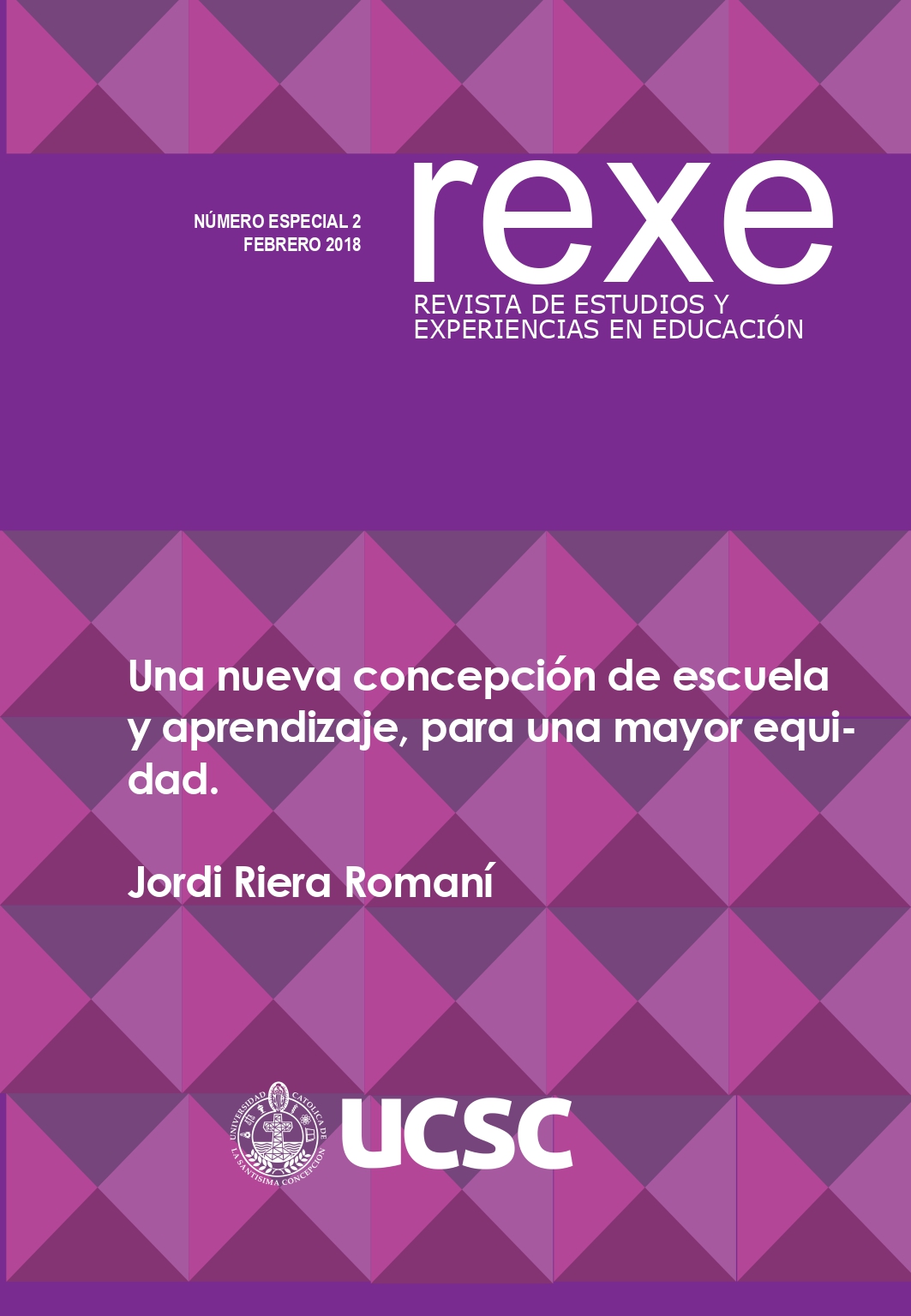
Socio-educational networks against child poverty. Impact evaluation of the CaixaProinfancia program from stakeholders' perception.
DOI:
https://doi.org/10.21703/rexe.Especial2_20181111286Keywords:
Evaluation, Stakeholders' perception, Child poverty, Comprehensive socio-education action, EtworkingAbstract
The CaixaProinfancia program seeks the promotion of children and families in poverty and vulnerability in Spain from a social and educative action. This multidimensional action is coordinated and provided by the organization of local socio-educational networks. One of the first strategies used to explore the impact of the program has been the evaluative study from the perspective of the stakeholders. This methodology, close to the tradition of the Grounded Theory, has been chosen given the internal needs of accountability and the limitations to have comparison groups. To analyze the information obtained through focus groups and interviews, an inductive process was used to improve the understanding of the program and its effectiveness. The main results of the evaluation indicate greater empowerment of the participants, progress in the educative development of children and their school inclusion, increased family well-being, and improvements in the implementation of a comprehensive socio-educational action model.
Downloads
References
Anyon, J. (2005). Radical Possibilities: Public Policy, Urban Education and New Social Movement. New York: Routledge.
Archambault, I., Janosz, M., Morizot, J. y Pagani, L. (2009). Adolescent Behavioral, Affective and Cognitive Engagement in School: Relationship to Dropout. Journal of School Health, 79 (9), 408-415. https://doi.org/10.1111/j.1746-1561.2009.00428.x
Bamberger, M., Rao, V. y Woolcock, M. (2010). Using Mixed Methods in Monitoring and Evaluation: Experiencies from International Development. Documento de trabajo del Banco Mundial sobre investigaciones relativas a políticas de desarrollo 5245. Citado en Gertler, P.J., Martínez, S., Premand, P., Rawlings, L.B. y Vermeersch, C. (2010). Impact evaluation in practice. Washington: The World Bank.
Calero, J., Chois, K., and Waisgrais, S. (2010). Determinantes del riesgo de fracaso escolar en España: una aproximación a través de un análisis logístico multinivel aplicado a PISA-2006, Revista de Educación, número extraordinario 2010, 225-256.
Carpenter, H., Cummings, C., Dyson, A., Jones, L., Laing, K., Oseman, D. y Todd, L. (2010). Extended services evaluation: end of year one report. Research report, dfe-rr016. (London, DFE). Disponible en https://www.education.gov.uk/publications/eorderingdownload/dfe-rr016.pdf
Civís, M. y Longás, J. (2015). La colaboración interinstitucional como respuesta al desafío de la inclusión socioeducativa. Análisis de 4 experiencias de trabajo en red a nivel local en Cataluña. Educación XXI, 18 (1), 213-236. https://doi.org/10.5944/educxx1.18.1.12318
Comisión Europea. (2010). Europa 2020. Una estrategia para un crecimiento inteligente, sostenible e integrador. Bruselas: Comisión Europea.
Copestake, J. (2014). Credible impact evaluation in complex contexts: Confirmatory and exploratory approaches. Evaluation, 20(4), 412-427. https://doi.org/10.1177/1356389014550559
Díaz-Gibson, J. y Civís, M. (2011). Redes Socioeducativas promotoras de capital social en la comunidad: un marco teórico de referencia. Cultura y Educación, 23 (3), 415-429. https://doi.org/10.1174/113564011797330270
Díaz-Gibson, J., Civís, M. y Longás, J. (2013). La gobernanza de redes socioeducativas: claves para una gestión exitosa. Teoría de la Educación, 25 (2), 213-230. https://doi.org/10.14201/11584
Eurostat. (2013). People at risk of poverty or social exclusion by age and sex. 2011. [ilc_peps01, última modificación 15/12/2014]. Recuperado el 14-01-2015 en: http://ec.europa.eu/eurostat/web/income-and-living-conditions/data/database
Gacía-Alegre, E. (2013). “Èxit educatiu i pobresa infantil a Catalunya. Reptes de les polítiques socioeducatives” en: Martínez Martín, Albaigés Blasi, B. (dirs.). L’estat de l’educació a Catalunya. Anuari 2013, 415-424. Barcelona: Fundació Jaume Bofill.
Geddes, H. (2010). El apego en el aula. Barcelona: Grao.
Gertler, P.J., Martínez, S., Premand, P., Rawlings, L.B. y Vermeersch, C. (2011). Impact evaluation in practice. Washington: The Wordl Bank.
Glaser, B.G. y Strauss, A.L. (1967). The Discovery of Grounded Theory.Strategies for Qualitative Research. Chicago: Aldine.
González-Bueno, G., Bello, A. & Arias, M. (2012). La infancia en España 2012-2013. El impacto de la crisis en los niños. Madrid: UNICEF.
INE. Instituto Nacional de Estadística. (2012). Encuesta de Condiciones de Vida Año 2011. Transmisión intergeneracional de la pobreza y el bienestar. Nota de prensa, 08-11-2012. Madrid: INE. Recuperado el 28/06/2013 en: www.ine.es
Lewin, K. (1946). Action research and minority problems. Journal of Social Issues, 2(4), 34-46. https://doi.org/10.1111/j.1540-4560.1946.tb02295.x
Marchesi, A. & Hernández, C. (2003). El fracaso escolar. Una perspectiva internacional. Madrid: Alianza Editorial.
Miller, P. (2016). Liderazgo de intermediación en entornos complejos. SIPS – Pedagogía Social Revista Interuniversitaria, 28, 17-24. https://doi.org/10.7179/PSRI_2016.28.02
Nickols, F. (2005). Why a stakeholder approach in evaluating training. Advances in Developing Human Resources, 7(1), 121-134. https://doi.org/10.1177/1523422304272175
Pàmies, J. (2013). The impact of groupings in school. Spaces of learning and sociability for Moroccan youth in Barcelona. Revista de Educación, (362), 133–158. https://doi.org/10.4438/1988-592X-RE-2011-362-156
Pedró (2012). Políticas públicas sobre apoyo y refuerzo educativo: evidencias internacionales. Revista de Educación, número extraordinario 2012, pp. 22-45. https://doi.org/10.4438/1988-592X-RE-2012-EXT-205
Pozo, M.T., Suárez, M. y García-Cano, M. (2012). Logros educativos y diversidad en la escuela: hacia una definición desde el consenso. Revista de Educación, 358, 59-84. https://doi.org/10.4438/1988-592X-RE-2012-358-183
PSITIC (2013a). Programa Caixaproinfancia Modelo de promoción y desarrollo integral de la infancia en situación de pobreza y vulnerabilidad social. Barcelona: Obra Social “la Caixa”.
PSITIC (2013b). Modelo de acción social Programa Caixaproinfancia. Barcelona: Obra Social “la Caixa”.
PSITIC (2013c). Guía del Refuerzo Educativo Programa Caixaproinfancia. Barcelona: Obra Social “la Caixa”.
PSITIC (2013d). Guía de Atención Psicoterapéutica Programa Caixaproinfancia. Barcelona: Obra Social “la Caixa”.
Rao, V. y Woolcock, M. (2003). Interating Qualitative and Quantitative Approaches in Program Evaluation. En Bourguignon, F.J. y Pereira da Silva, L. (2003): The Impact of Economic Policies on Poverty and Income Distribution: Evaluation Techniques and Tools, pp. 165-190. Nueva York: Oxford University Press.
Renée, M. y Mcalister, S. (2011). The Strengths and Challenges of Community Organising as an Education Reform Estrategy: What the Research Says. Quincy: Nellie Mae Education Foundation.
Riera, J. (2012). L'educació és una de les estratègies principals perquè la pobresa deixi de ser hereditària. Interview with Dr. Jordi Riera in Butlletí Blanquerna (163).
Roman, S., Cuestas, P. J., y Fenollar, P. (2008). An examination of the interrelationships between self-esteem, others’ expectations, family support, learning approaches and academic achievement. Studies in higher education, 33(2), 127–138. https://doi.org/10.1080/03075070801915882
Stufflebeam, D.L. y Shinkfield, A.J. (1985). Systematic evaluation. Boston: Kluwer-Nijhoff Publishing.
Downloads
Published
Issue
Section
License
Copyright (c) 2018 REXE- Revista de Estudios y Experiencias en Educación

This work is licensed under a Creative Commons Attribution 4.0 International License.
Open Access Policy
This journal provides immediate open access to its content, based on the principle that offering the public free access to research fosters greater global knowledge exchange.
License
The REXE Journal, “Journal of Studies and Experiences in Education,” published by the Faculty of Education at the Universidad Católica de la Santísima Concepción, is distributed under a License. Creative Commons Atribución 4.0 Internacional.